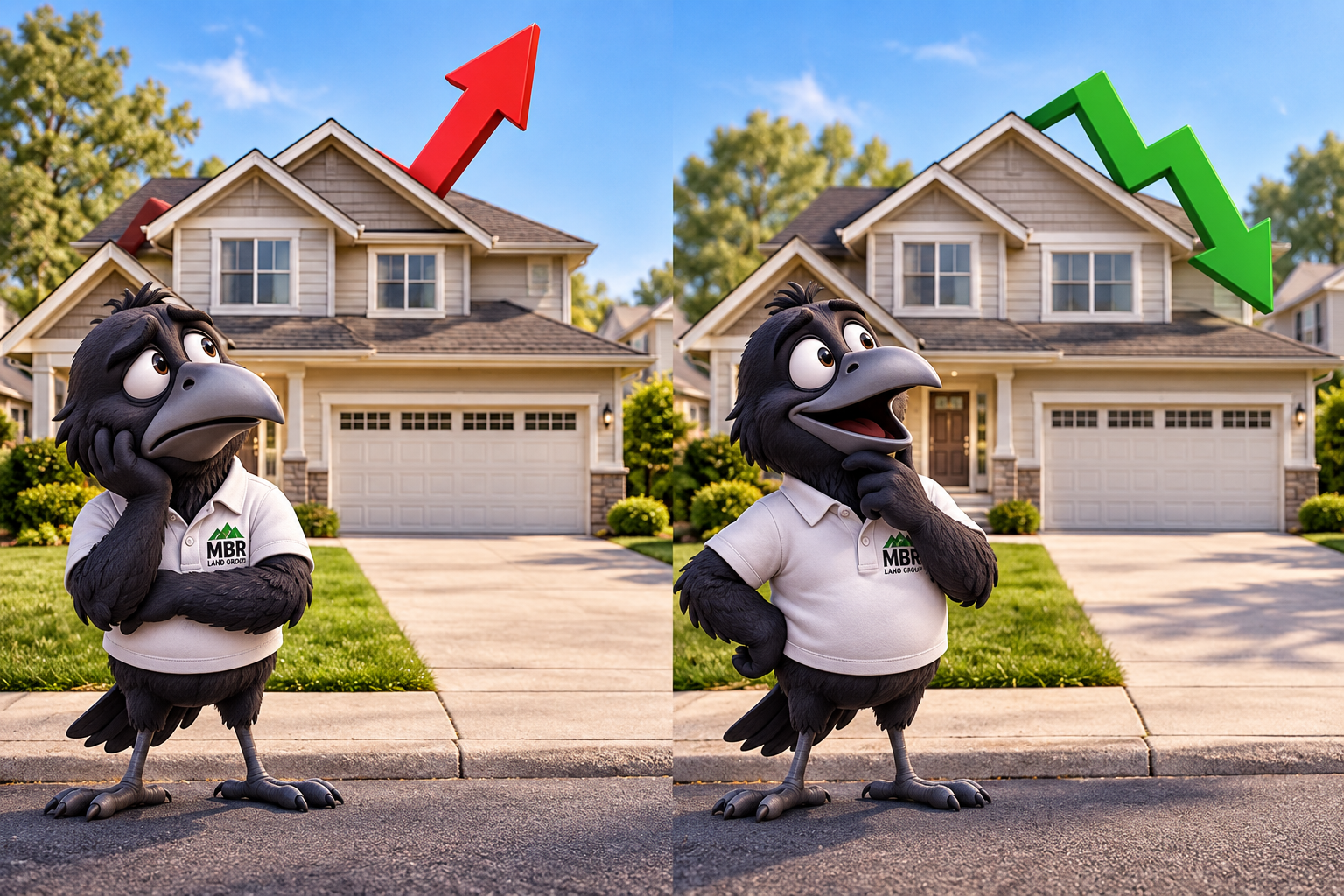
And does it really matter?
From about 2019–2022 was about as strong of a seller’s market for lots and land that I can remember.
During that period there was great activity in both investment acreage and land for development. Also acreage homesites, where people were wanting to build their dream homes outside of the city. I have a lot (pun sort of intended) of experience valuing lots, but even I was having a hard time with it.
I almost couldn’t price it high enough.
It got to where I would do my analysis, come up with what the comps “should” represent, then arbitrarily tack 20–30% onto it. Basically just add $50K to what the numbers said. And most of the time it would sell almost immediately.
It was great, until it stopped. Quickly. Things are still happening, but much slower. And values have basically been moving sideways. Lot sales are the easiest place to see it. When a lot that sold in 2021 or 2022 retrades today, the price is generally about the same.
The phone was still ringing, just nowhere near as fast.
That seems to be changing some. Activity on my listings has picked up in the last month or so. Of course, when it’s slow, getting any calls seems like an increase. And it may just be a coincidence.
At any rate, if you’ve been wanting to sell but haven’t liked what the market was offering, you might have a better opportunity coming.
Or if you haven’t been looking to sell, you might start getting inquiries soon from people other than the lowball artists you see all the time.
Or maybe it won’t turn and we will all be waiting a little longer.
The truth is, I don’t know whether we’re seeing the beginning of a stronger market or just a few more people kicking tires.
But you don’t need to predict the market to benefit from knowing where you stand.
Whether you’re motivated or not, it’s always a good time to figure out what you have and where you stand. Things can change fast, both in regard to the market and to someone’s personal situation. It’s better to have current information and not need it, than to realize you needed it yesterday and are now scrambling.
That’s what the MBR Land Reality Check is for. It gives you a clear-eyed view of what your property might sell for today, along with what’s going on nearby that might be relevant.
Valuable information no matter what your current plans are.
Did I mention it’s free? No obligation? And best of all, no pressure?
I know everybody says that. So don’t take my word for it.
At the link below you can see a sample Land Reality Check, no email required, along with what other landowners have said about their experience.
Take a look. If you think it would be useful to have one for your own property, you can request it right there.